Recommended Devotionals for 2024

A roundup of resources that draw us to meditation on Biblical truth.

Refreshment for the Soul by Richard Sibbes

366 readings pulled from the writings of Puritan Richard Sibbes.

Morning Thoughts by Octavius Winslow

Compiled from the writings of Octavius Winslow, this is a devotional that blesses with each reading. Winslow was a contemporary of C.H. Spurgeon. There is also an evening version.

Walking with God Day by Day by Martyn Lloyd-Jones

Martyn Lloyd-Jones is one of my favorite pastors of the 20th century. This collection of devotional thoughts is a great way to wade into his body of excellent books.

Recommended Devotionals for 2023

Book Recommendation page

Octavius Winslow: The Throne of Grace

Powerful words from Octavius Winslow on remembering prayer is coming before God’s throne of grace. A reading from Morning Thoughts, which has been my favorite devotional this year.

“The throne of grace.” Hebrews 4:16

Forget not, dear reader, it is the throne of grace, to which you come in prayer. It is a throne, because God is a Sovereign. He will ever have the suppliant recognize this perfection of His nature. He hears and answers as a Sovereign. He hears whom He will, and answers what and when He will. There must be no dictation to God, no refusing to bow to His sovereignty, no rebelling against His will. If the answer be delayed, or God should seem to withhold it altogether, remember that “He gives no account of any of His matters,” and that He has a right to answer or not to answer, as seems good in His sight. Glorious perfection of God, beaming from the mercy-seat!But it is also a throne of grace. And why? Because a God of grace sits upon it, and the scepter of grace is held out from it, and all the favors bestowed there are the blessings of grace. God has many thrones. There is the throne of creation, the throne of providence, the throne of justice, and the throne of redemption; but this is the throne of grace. Just the throne we need. We are the poor, the needy, the helpless, the vile, the sinful, the unworthy; we have nothing to bring but our deep wretchedness and poverty, nothing but our complaints, our miseries, our crosses, our groanings, our sighs, and tears.

But it is the throne of grace. For just such is it erected. It is set up in a world of woe- in the midst of the wilderness- in the very land of the enemy- in the valley of tears, because it is the throne of grace. It is a God of grace who sits upon it, and all the blessings He dispenses from it are the bestowments of grace. Pardon, justification, adoption, peace, comfort, light, direction- all, all is of grace. No worth or worthiness in the creature draws it forth- no price he may bring purchases it- no tears, or complainings, or misery moves the heart of God to compassion- all is of grace. God is so full of compassion, and love, and mercy, He does not need to be stimulated to pour it forth. It gushes from His heart as from a full and overflowing fountain, and flows into the bosom of the poor, the lowly, the humble, and the contrite; enriching, comforting, and sanctifying their souls.

Then, dear reader, whatever be your case, you may come. If it is a throne of grace, as it is, then why not you? Why stand afar off? If the poor, the penniless, the disconsolate, the guilty are welcome here- if this throne is crowded by such, why make yourself an exception? Why not come too? What is your case, what is your sorrow, what is your burden? Ah! perhaps you can disclose it to no earthly ear. You can tell it  only to God. Then take it to Him. Let me tell you for your encouragement, God has His secret audience-chamber, where He will meet you alone, and where no eye shall see you, and no ear shall hear you, but His; where you may open all your heart, and disclose your real case, and pour all your secrets into His ear. Precious encouragement! It comes from those lips into which grace was poured. “You, when you pray, enter into your closet, and when you have shut your door, pray to your Father which is in secret; and your Father which sees in secret shall reward you openly.” Then, upon this promise, go to the throne of grace. Whatever be the need, temporal or spiritual, take it there. God loves your secrets. He delights in your confidence, and will honor the soul that thus honors Him.

A Prayer That Children Can Understand and Pray

Three hundred years ago, Matthew Henry completed his Commentary on the Bible that is still used and respected today, known for its devotional insight, sound theology, and practical wisdom. But Matthew Henry considered another work to be so important that he stopped writing his Commentary to complete it. That work is his book on praying the Scriptures systematically.

The entire volume is a treasury of prayer, but this one he wrote for children is a favorite. Henry compiled a prayer full of Scripture, but able to be understood and memorized by children. Here is the prayer as edited and revised by O. Palmer Robertson in this edition of Henry’s work from Banner of Truth.

O Lord, you are my God. I will seek you while I am young. I will praise you. I will exalt you because you are my father’s God.

Who is a God like you? Who can do wonders like you? Who is glorious in holiness, awesome in praises like you?

Whom do I have in heaven apart from you? There is nothing on this earth that I desire more than you. When my flesh and my heart fail, you remain as the strength of my life and my most treasured possession forever. You made me for yourself to praise you.

But I am a sinner. I was sinful at birth. I was even sinful when my mother conceived me.

God, be merciful to me a sinner.

Deliver me from the wrath to come. Save me through Jesus, who died for me and rose again.

Lord, give me a new nature. Let Jesus Christ be formed in my soul. Let me live my life for Christ. Let death bring gain to me.

Lord, I was given to you in my baptism. Please receive me graciously and love me freely.

Lord Jesus, you have encouraged little children to come to you. You have said that the Kingdom of God belongs to children and to people who are like children. I now cons to you. Make me a faithful subject of your kingdom. like me up in your arms. But your hands on me and bless me.

Let me be redeemed by your grace from all iniquity. Especially deliver me from the vanity into which all children are led.

Lord, give me a wise and understanding heart. Let me know and do your will in everything. Help me so that I may not sin against you in anything. Deliver me from lips that lie.

Bless me from my childhood so that I may know the Holy Scriptures. Bless my parents and grandparents as they teach me. Graciously write your law in my heart. Let me remain faithful to the good things I have learned.

Be a father to me. Meet all my needs as my loving heavenly Father. Teach me. Guide me. Provide for me. Protect me. Bless me, O my Father.

Bless all my relatives. Bless my father, mother, brothers, sisters, cousins, aunts and uncles. Give me grace to do my duty to all of them.

Lord, prepare me for death. Give me grace and wisdom to consider how my life will end.

Thank you for all your mercies to me. Thank you for life, health, food, clothes, and my education. Thank you for creating and preserving me. Thank you for all the blessings of this life. Above all, thank you for your great and infinite love, for the gift of Jesus your Son, and for the hope of glory.

I thank you, O my God, for the amazing gift of your Son. I lift my voice in praise for JESUS CHRIST. I desire Jesus alone. There is no one else I need apart from him.

Now to God the Father, the Son, and the Holy Spirit, that great name into which I was baptized, be honour and glory, dominion and praise, forever and ever. Amen.

A Way to Pray, pp. 221-222

Recommended Devotionals for 2023

A roundup of resources that draw us to meditation on Biblical truth.

The Heart of a Servant Leader and Saving Grace by Jack Miller

Jack Miller was a servant-hearted leader who consistently pointed others to the strength of Christ. A seminary professor, pastor, missionary, he was no stranger to hardships, which made him an excellent companion to walk his readers through their own trials of faith. These letters are a spiritual feast.

Compiled from the sermons, teachings and writings of Jack Miller, this is a devotional that blesses with each reading. My most highlighted and gifted devotional.

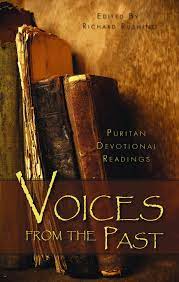
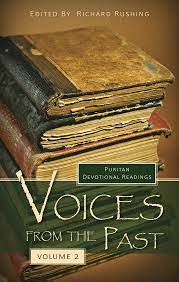
Voices From the Past Vol. 1 and Vol. 2 compiled by Richard Rushing

Scholar Richard Rushing spent more than a decade compiling these devotional writings from great Puritan thinkers like Richard Baxter, John Bunyan, Steven Charnock, Jonathan Edwards, John Owen, Samuel Rutherford, Richard Sibbes and many others. I’ve worked through each volume a few times and always find fresh, deep, provocative reflections.

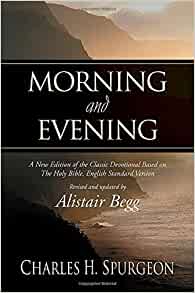
The Promises of God and Morning and Evening by C.H. Spurgeon

Spurgeon was a master at balancing his sophisticated knowledge of the Scriptures with a warm pastoral heart. His daily readings from various verses throughout the Scriptures are always practical and gospel-saturated. The Promises of God were previously published as The Checkbook of Faith and encourage readers to trust more fully in the promises of God.

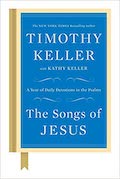
God’s Wisdom for Navigating Your Life and The Songs of Jesus by Tim Keller

Keller is one of the great thinkers and writers of the our time. In these devotional resoruces, he takes us through the Proverbs and Psalms and teaches readers to both meditate on the Scriptures and properly apply them to our lives. Time with these will proved to be time well spent.

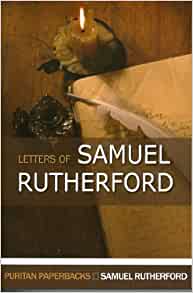
The Letters of Samuel Rutherford

Samuel Rutherford was a Scottish pastor who lived in the 17th century. A significant part of his ministry included writing letters to those under his care. In these letters, Rutherford encouraged his people by calling them to take comfort in Christ. Rutherford was uniquely qualified to comfort the afflicted as he lost his beloved wife only two years into their marriage. Spurgeon wrote of these letters, “When we are dead and gone let the world know that Spurgeon held Rutherford’s Letters to be the nearest thing to inspiration which can be found in all the writings of mere men.”

Memoir & Remains of Robert Murray M’Cheyne

Robert Murray M’Cheyne was a Scottish minister in the 19th century. He ministered faithfully for eight years and then died of typhus at age 29. His memoirs were published by his close friend and college companion, Andrew Bonar. Spurgeon said of this volume “This is one of the best and most profitable volumes ever published. The memoir of such a man ought surely to be in the hands of every Christian, and certainly every preacher of the Gospel.”

Select Letters of John Newton

I discovered the letters of John Newton when Tim Keller put them on his 2008 Summer Reading List. As Keller put it, “These letters are classics of spirituality and devotion.”  This famous slave trader upon his conversion, became a poweful minister of the gospel who would write the beloved hymn, “Amazing Grace.” These letters are worth reading and rereading.

The Valley of Vision

An excellent collection of Puritan prayers which capture the tenacity with which these pastors and thinkers pursued their personal faith and stired hearts. Similar to the Psalms, these prayers will add vocabulary to your prayer life.  If growing in prayer is your aim, then The Valley of Vision must become regular part of your repertoire.

Recommended Devotionals for 2024

Book Recommendation page

Remember This If You Are Ever Challenged to a Debate

Harry A. Ironside tells this remarkable story about being challenged to a debate.

Early in his ministry Ironside was living in the San Francisco Bay area, working with some Christians called Brethren. One evening as he was walking through he city he came upon a group of Salvation Army workers holding a meeting on the corner of Market and Grant Avenues. When they recognized Ironside they asked if he would give his testimony. So he did, giving a word about how God had saved him through faith in the bodily death and literal resurrection of Jesus.

As he was speaking, Ironside noticed that on the edge of the crowd was a well-dressed man who had taken a card from his pocket and had written something on it. As Ironside finished his talk the man came forward, lifted his hat, and very politely handed Ironside the card. On one side was his name, which Ironside recognized immediately. The man was one of the early socialists who had made a name for himself lecturing against Christianity. As Ironside turned the card over he read, “Sir, I challenge you to debate with me the question ‘Agnosticism versus Christianity’ in the Academy of Science Hall next Sunday afternoon at four o’clock. I will pay all expenses.”

Ironside reread the card aloud and then replied:

I am very much interested in this challenge. Frankly, I am already scheduled for another meeting next Lord’s Day afternoon at three o’clock, but I think it will be possible for me to get through with that in time to reach the Academy of Science by four, or if necessary I could arrange to have another speaker substitute for me at the meeting already advertised. Therefore I will be glad to agree to this debate on the following conditions: namely, that in order to prove that this gentleman has something worth debating about, he will promise to bring with him to the Hall next Sunday two people, whose qualifications I will give in a moment, as proof that agnosticism is of real value in changing human lives and building true character.

First, he must promise to bring with him one man who was for years what we commonly call a “down-and-outer.” I am not particular as to the exact nature of the sins that had wrecked his life and made him an outcast from society–whether a drunkard, or a criminal of some kind, or a victim of his sensual appetite–but a man who for years was under the power of evil habits from which he could not deliver himself, but who on some occasion entered one of this man’s meetings and heard his glorification of agnosticism and his denunciations of the Bible and Christianity, and whose heart and mind as he listened to such an address were so deeply stirred that he went away from that meeting saying, “Henceforth, I too am an agnostic!” and as a result of imbibing that particular philosophy found that a new power had come into his life. The sins he once loved he now hates, and righteousness and goodness are now the ideals of his life. He is now an entirely new man, a credit to himself and an asset to society–all because he is an agnostic.

Secondly, I would like my opponent to promise to bring with him one woman–I think he may have more difficulty in finding the woman than the man–who was once a poor, wrecked, characterless outcast, the slave of evil passions and the victim of man’s corrupt living, perhaps one who had lived for years in some evil resort, utterly lost, ruined and wretched because of her life of sin.
… But this woman also entered a hall where this man was loudly proclaiming his agnosticism and ridiculing the message of the Holy Scriptures. As she listened, hope was born in her heart, and she said, “This is just what I need to deliver me from the slavery of sin!” She followed the teaching until she became an intelligent agnostic or infidel. As a result, her whole being revolted against the degradation of the life she had been living. She fled from the den of iniquity where she had been held captive so long; and today, rehabilitated, she has won her way back to an honored position in society and is living a clean, virtuous, happy life–all because she is an agnostic.

“Now.” he said, addressing the gentleman who had presented him with his card and the challenge, “if you will promise to bring these to people with you as examples of what agnosticism can do, I will promise to meet you at the Hall of Science at four o’clock next Sunday, and I will bring with me at the very least one hundred men and women who for years lived in just such sinful degradation as I have tried to depict, but who have been gloriously saved through believing the gospel which you ridicule. I will have these men and women with me on the platform as witnesses to the miraculous saving power of Jesus Christ and as present-day proof of the truth of the Bible.”

Dr. Ironside then turned to the Salvation Army captain, a woman, and said, “Captain, have you any who could go with me to such a meeting?”

She exclaimed with enthusiasm, “We can give you forty at least, just from this one corps, and we will give you a brass band to lead the procession!”

“Fine,” Dr. Ironside answered. “Now, sir, I will have no difficulty picking up sixty others from the various missions, gospel halls, and evangelical churches of the city. So if you will promise to bring two such exhibits as I have described, I will come marching in at the head of such a procession, with the band playing Onward, Christian Soldiers,’ and I will be ready for the debate.”

Apparently the man who had made the challenge had some sense of humor, for he smiled wryly and waved his hand in a deprecating kind of way as if to say, “Nothing doing!” and then edged out of the crowd while the bystanders applauded Ironside and the others.

H.A. Ironside, Random Reminiscences from Fifty Years of Ministry, 99-109

Easter Reading: Jesus in the Darkness

In his book The Cross He Bore, Frederick Leahy writes powerfully about the darkness Christ endured on the cross.

Now from the sixth hour there was darkness over all the land until the ninth hour. (Matt. 27:45)

At high noon, when the sun was at its zenith, Christ and those who stayed to mock found themselves in thick darkness that was to last for three hours. A hand from on high had veiled the sun. Cowed but not convinced, the scoffers grew silent and slunk away. As Calvin says, they were bewitched by the enchantments of Satan’

At Bethlehem, when the Saviour was born, the night was changed to day as the glory of the Lord shone around the shepherds. On Golgotha the day gave way to night as Christ sank deeper and deeper into the abyss of damnation. At Bethlehem there were countless angels praising God; on Golgotha legions of darkness filled the impenetrable gloom, hoping that darkness would finally triumph over light.

Golgotha was so different from the mount of transfiguration where the Lord conversed with Moses, representing the law, and Elijah, representing the prophets (Mark 9:2-4). There, for a brief moment, the glory of deity broke through the veil of flesh, a fleeting glimpse of the radiant splendour of Christ when he comes at the end of this age ‘in the glory of his Father with the holy angels’ (Mark 8:38).

Between the shining forth of glory at the transfiguration and the glory of the second coming, however, lies the heavy darkness of Golgotha.

At the creation, God, at an early stage, introduced light. Yet now he leaves his Son suspended in darkness at midday. Why must the light of the world be placed in darkness? Why is there this startling contrast between Bethlehem and Golgotha, between the transfiguration and Golgotha, between the dawn of creation and that of the new creation?

Not only did this darkness at noonday hide the awful spectacle of the Sufferer from the contemptuous gaze of the scoffers, silencing their ribaldry, but also it mercifully concealed Christ when he experienced his darkest moment on the cross. No human eye must see him then. This darkness coincided with Christ’s descent into hell. Now he felt the unmitigated wrath of a holy God against sin. That darkness was a symbol of God’s wrath. Hendriksen says that God’s wrath was burning itself out in the heart of Jesus’, adding, ‘Hell came to Calvary that day, and the Saviour descended into it and bore its horrors in our stead.’ This was the Passover season. Just before the first Passover a plague of darkness betokened the curse of God upon his enemies (Exod. 10:21-23). The darkness that enveloped the Saviour at Calvary was clearly a visible expression of the inner darkness that wrung that dread cry of dereliction from his lips: ‘My God, my God, why have you forsaken me?’ (Matt. 27:46). To be forsaken by God is hell.

This was the moment when the prophecy of Daniel 9:26 was fulfilled: “An anointed one shall be cut off, and shall have nothing’ (see also Isa. 53:8). E. J. Young sees the expression “shall have nothing’ (literally and there is not to him’) as a very forceful way of setting forth His utter rejection, both by God and man… In that hour of blackness He had nothing, nothing but the guilt of sin of all those for whom He died. Utterly forsaken, He was cut off. Frans Bakker has this in mind when he thinks of Christ on the cross, poor and naked as the day he was born, while the soldiers gambled for his clothing. Not only did He lose all His gifts; He also lost the Giver. But He didn’t cry about His condition, only that God had forsaken Him. Christ cried to God, but for Him there was no mercy; He had to bear the curse; He had no rights. This is the stunning truth, yet, paradoxically, in the very moment that he lost all, he won all. As the Apostle Paul considered Christ’s death on the cross, the thought suddenly struck him, He did it because he loved me’ – another stunning truth.

Darkness also symbolizes mystery. There is much mystery at Calvary. A great deal has been revealed: substitution, conflict with the evil one, reconciliation and more – God’s holiness, justice and love. But how much of any of these can the human mind grasp? Is not Calvary a place veiled in darkness, even as God himself dwells in thick darkness (1 Kings 8:12, Psa. 18:11), a place so holy and so awful that the wisest thing to do is to remove one’s shoes and bow in penitent, grateful silence?

THE PORTENT OF THIS DARKNESS

This darkness, charged as it was with divine judgment, signalled the final judgment. And again darkness is used as a symbol of God’s wrath. The Apostle Peter, quoting from the prophet Joel, declared, The sun shall be turned to darkness and the moon to blood, before the day of the Lord comes, the great and magnificent day’ (Acts 2:20; see Isa. 13:10; 50:3, Joel 2:30, 31, Amos 8:9). Barely two months previously the people of Jerusalem had seen the sun turned into darkness, and, as F. F. Bruce points out, ‘The paschal moon may well have appeared blood-red in the sky in consequence of that preternatural gloom. These signs were tokens of the day of judgment, and so the prophecy of Joel forms the background to the description of the day of wrath in Revelation 6:12, “And the sun became black as sackcloth, the full moon became like blood… There we see the doom of the godless as this day of grace comes to an end, and all is for ever dark.

Did the light begin to return when Christ uttered his awful cry of God-forsakenness? Certainly it was then that they could see to dip a sponge in vinegar and give it to him to drink (Matt. 27:48). Then was fulfilled the Lord’s own prophecy, For my thirst they gave me sour wine to drink’ (Psa. 69:21) – a cheap, sour wine to quench his burning thirst. That darkness had held eternity in every minute that passed. It has been urged that because Christ’s sufferings were temporal and not eternal they could not be an equivalent for the eternal punishment of the lost. It is further asked how the death of one man could possibly be a satisfaction for the sins of an incalculable multitude. Such objections do not sufficiently take into account the fact that while Christ suffered in his human nature, he was a divine Person. Because of the infinite dignity of the One who suffered, there was infinite value attached to his work.

If the darkness through which the Saviour passed was so dreadful, how great must be the darkness of the sin he bore. This, says Calvin, should ‘excite in us deeper horror at our sins’. Those who live and die in unforgiven sin, live and die in darkness. There is no light for anyone except in Christ. Earthly wisdom is darkness in the sight of God. Christ exclaimed, If then the light in you is darkness, how great is the darkness!’ (Matt. 6:23). Calvin comments, Christ has good grounds for declaring that thick and appalling darkness must of necessity reign in the life of men, when they choose to be blind.’ It is Christ who by his cross turns man’s night into day. Spurgeon says, ‘The cross is the lighthouse which guides poor weather-beaten humanity into the harbour of peace.’

When the Covenanter, John Welsh, was imprisoned in a dungeon in Blackness, on the Firth of Forth, he received a letter from Lady Melville, of Culross, addressed to him and his fellow-captives, bidding them to be thankful that they were only in the darkness of Blackness, and not in the blackness of darkness’. Christ spoke solemnly of ‘outer darkness’ associating it with unspeakable anguish (Matt. 8:12; 22:13; 25:30). To redeem his people he entered and endured that darkness. Now he calls us out of darkness into his marvellous light’. He is the true light and those who follow him will not walk in darkness, but will have the light of life’ (1 Pet. 2:9, John 8:12).

(Frederick Leahy, The Cross He Bore, 91-98)

The Christian’s Expectation of the Future

Cornelius Venema writes about how Christians should anticiplate the future with hope:

This is the pattern of the believer’s expectation for the future: it is characterized by a hope nurtured by the Word. It is marked out by a lively expectation of the accomplishment of God’s purpose in Christ. The future does not loom darkly on the horizon as something to be feared. It is something eagerly expected and anticipated, something which the believer is convinced is bright with the promise of the completion and perfection of God’s saving work. It is true that many of the biblical exhortations relating to the future call God’s people to watchfulness and sobriety, warning them against being found unprepared at Christ’s coming (1 Pet. 4:7, 1 Thess. 5:6, Matt. 24:42-45). They often warn the church to remain faithful and steadfast in holding to the apostolic teachings and Word of God (2 Thess. 2:15, Heb. 10:23). In addition, the biblical descriptions of Christ’s coming starkly describe its frightening and terrible consequences for the wicked (2 Thess. 2:8, 2 Pet. 3:12, Rev. 18:10).

But the chief note sounded in God’s revelation regarding the future is one of hope. God’s people eagerly await Christ’s return because it promises the completion of God’s work of redemption for them and for the whole creation. The Christian’s approach to the future is always one of hope nurtured by the Word. The future is bright because it is full of promise, the promise of God’s Word.

(The Promise of the Future, Venema, p. 11)

The Secret to Changing Our Bad Habits

Jack Miller writing on John 21:15, “Jesus said to Simon Peter, ‘Simon, son of John, do you love me more than these?’ He said to him, ‘Yes, Lord; you know that I love you.'”

How do people change and become fit to live with? Habits are really hard to change. At least I’ve noticed that my wife’s are. And she has probably noticed the same thing about me! Only God’s love for us and our love for God brings deep down change. So Jesus’s questions are emphasizing what he really wants from Peter – his love. He is asking him: Do you truly love me? And is your love for me changing you at the deepest level? Does it cause you to pray? Does it help you say no to your desires? Is it teaching you patience? Peter had been boastful in promising Jesus he would lay down his life for him. He had also been fearful when he denied knowing Jesus. Jesus wants Peter to see that these struggles, at their heart, are about whom he loves. When you give your heart to Jesus, to him who laid down his life for you, you will change. The love of Christ will control your mind, your will, your choices, and your words. It’s going to get right down to the way you live, the way you are when you get up in the morning, even before you have coffee. Jesus is asking you today, “Do you love me?” How will you answer?

Saving Grace, p. 350

Jack Miller: Don’t Seek Repentance; Seek Christ

I’ve been getting to know the teachings of Jack Miller thanks to the recent biography by Michael Graham titled, Cheer Up! The Life and Ministry of Jack Miller. As I’ve read some of Jack’s writings, I’ve been particularly helped by The Heart of a Servant Leader, a compilation of his letters to pastors, missionaries, friends, and family. It is one of the wisest books on humble leadership that calls leaders to learn to rely on Christ for strength that I’ve ever read.

Here’s a letter that Jack wrote to a woman questioning whether she is really a Christian.

April, 1983

Dear Elise,

Thank you for your recent letter concerning your desire to know whether you have had a God-centered repentance. So set aside any fears that I might be unwilling to take time to help you. Perhaps I can help you if you will recognize that all I can do is be a small finger pointing to a large Christ. But if you trust yourself to Him be confident He is not only willing to help you but has the power to help you.

What do you need to know? First, repentance and faith are not like a sidewalk that you must travel on to get to the house of salvation. They are the door or, perhaps better, God’s ways for being near Him. When you turn to Christ, you don’t have a repentance apart from Christ you just have Christ. Therefore don’t seek repentance or faith as such but seek Christ. When you have Christ you have repentance and faith. Beware of seeking an experience of repentance; just seek an experience of Christ.

The Devil can be pretty tricky: He doesn’t mind you thinking much about repentance and faith if you do not chink about Jesus Christ. He wants you to worry a great deal about whether you have really repented. Examining yourself is fine–if you relate it to the cross and Christ’s love for you. But the point of my little book is that any surrow for sin apart from Christ is not going to help you. So don’t even seek sorrow for sin or to see whether your repentance is genuine. Seek Christ, and relate to Christ as a loving Savior and Lord who wants to invite you to know Him.

You raise the question whether or not you are saved, and rightly suggest that maybe what counts for you right now is not that question so much as getting to know Christ. You are definitely on target. Get to know Christ and you will be sure of your relationship to Him.

But how do you get to know Christ? Keep two things in view: first, you cannot know Him unless you are sure He loves you and died personally for Elise’s sins, your sins. To give you faith that redeems you, Jesus gives you a promise. He promises to save you. The gospel is not only a fact, but a promise that Christ who died for sins and rose again lives to welcome you. That is the whole point of John 3:16 and the many promises in the Gospel of John. You trust God and His Son because God loves you and gave His Son for you (fact) and then commits Himself by way of promise to receive you (John 1:12). It’s sometimes cheapened by evangelical Christians but it’s breathtaking in its simplicity and awesome wonder. God loves you very much.

Secondly, Christ calls us to abandon trust in our own strength and righteousness. We do not have the strength to improve ourselves morally or the righteousness with which to justify ourselves. “At the right time when we were without strength, Christ died for the ungodly.” Faulty, blind, degraded, we can do nothing but depend on Christ alone to give us assurance of salvation. So repentance and faith entail coming down from our thrones of self-dependence and pride and simply giving ourselves in surrender to Christ. Still, the devil may say to you: “You do not yet have sufficient conviction of sin to come to Christ.” Tell the devil to get away from you. Do you have a sense of shame over your sins? I think you do. That is a conviction of sin, not a feeling depressed or whatever. If you are ashamed of living a life independently of God, then the Holy Spirit has already convicted you of sin. Simply claim Christ as your Lord and Savior. Base your simple prayer of acceptance on His promise. Claim John 3:16-17.

Back to the question whether you are already saved. Don’t spend much time on this one, but spend your time getting to Christ. Speak to Him simply in prayer and ask Him to show Himself to you. He loves to reveal Himself to people. Then make sure you are cultivating a forgiving spirit toward others. Bitterness, condemnation of others, will rob a genuine believer of his or her fellowship with Jesus, and raise questions about assurance. Jesus does expect you to see what a forgiveness you have received and then to forgive others and keep on forgiving others. Put on forgiveness as your whole new life.

I would especially commend to you the study of Romans 10 to see how faith works. I would like to hear from you again.

Most cordially,

Jack Miller

The Heart of a Servant Leader, pp. 244-246

How C.S. Lewis Handled a Lost Election

C.S. Lewis died on November 22, 1963. In a letter to Anne Barrett dated August 30, 1964, J.R.R. Tolkien defended his late friend against literary criticism that he received upon his death. Tolkien pointed out that Lewis’ critics didn’t know the man and were unable to properly assess his character. He went on to give this example at a time when Lewis lost an election to be professor of poetry:

Well of course I could say more, but I must draw the line. Still I wish it could be forbidden that after a great man is dead, little men should scribble over him, who have not and must know they have not sufficient knowledge of his life of and character to give them any key to the truth. Lewis was not “cut to the quick” by his defeat in the election to the professorship of poetry: he knew quite well the cause. I remember that we had assembled soon after in our accustomed tavern and found C.S.L. sitting there, looking (and since he was no actor at all probably feeling) much at ease. “Fill up!” he said, “and stop looking so glum. The only distressing thing about this affair is that my friends seem to be upset.”

(Tolkien, The Letters of J. R. R. Tolkien)

Tolkien gives us a wonderful glimpse of the humility of Lewis. Arguably one of the most influential Christian writers of the 20th century, no one would have blamed Lewis for taken the loss hard. His lesser-known volume of collected poetry is quite good. In fact, in November 2013, Lewis was honored with a memorial stone in Poets’ Corner in Westminster Abbey, joining other great poets like Shakespeare, Spenser, Milton, and Wordsworth.

All this leads us to the great humility of the man who aspired to be considered a great poet, but had humility to take the loss of a professorship in poetry in stride. He could have railed against the election process or those who voted against him, but instead, chose to gather with his friends at their favorite tavern and encourage them to join him in moving on from the disappointment.

Here’s one of my favorite Lewis poems.

On Being Human

Angelic minds, they say, by simple intelligence
Behold the Forms of nature. They discern
Unerringly the Archtypes, all the verities
Which mortals lack or indirectly learn.
Transparent in primordial truth, unvarying,
Pure Earthness and right Stonehood from their clear,
High eminence are seen; unveiled, the seminal
Huge Principles appear.

The Tree-ness of the tree they know—the meaning of
Arboreal life, how from earth's salty lap
The solar beam uplifts it; all the holiness
Enacted by leaves' fall and rising sap;
But never an angel knows the knife-edged severance
Of sun from shadow where the trees begin,
The blessed cool at every pore caressing us
—An angel has no skin.

They see the Form of Air; but mortals breathing it
Drink the whole summer down into the breast.
The lavish pinks, the field new-mown, the ravishing
Sea-smells, the wood-fire smoke that whispers Rest.
The tremor on the rippled pool of memory
That from each smell in widening circles goes,
The pleasure and the pang—can angels measure it?
An angel has no nose.

The nourishing of life, and how it flourishes
On death, and why, they utterly know; but not
The hill-born, earthy spring, the dark cold bilberries.
The ripe peach from the southern wall still hot
Full-bellied tankards foamy-topped, the delicate
Half-lyric lamb, a new loaf's billowy curves,
Nor porridge, nor the tingling taste of oranges—
An angel has no nerves.

Far richer they! I know the senses' witchery
Guards us like air, from heavens too big to see;
Imminent death to man that barb'd sublimity
And dazzling edge of beauty unsheathed would be.
Yet here, within this tiny, charmed interior,
This parlour of the brain, their Maker shares
With living men some secrets in a privacy
Forever ours, not theirs.

(Lewis, Poems, 57-58)